


Occam’s Razor-Maintaining a Sourdough Starter

The solution that requires the least assumption is typically the best one. That is Occam’s Razor. It only
Took a single generation for us to collectively lose the skills our grands and great-grands applied daily. Sourdough bread is not complicated. It only requires the time we swear we don’t have.
Sourdough has been around for about 10000 years.
Prior to the advent of commercial yeast, wild cultures were used to leaven bread. It has and does go by many names: Levain, The Mother, Lievito Madre, and many many more. When beer brewing became more commercialized, bakeries could source yeast from Brewers. However, around 300 years ago, brewers began to switch from ales to lagers and the yeasts used for lager production is not ideal for bread-making. So our great-grands once again had to rely on The Mother.
Hear any sourdough aficionado today speak on maintaining a starter and it is a tedious and expensive task that involves daily feedings, careful measurements, and discarding a considerable amount of the mixture.
Do you think our ancestors for 10000 years had been daily feeding sourdough starter ? Probably not.
Do you think they had access to precision digital measuring devices? Definitely not.
Were they discarding the starter they didn’t want or need for bread? A resounding no. Starter is simply flour and water that has been provided an environment that promotes fermentation. When you don’t want to make bread with it, you find another use for it. Whether it’s biscuits, cookies, pancakes, gravies, or even to thicken a sauce or two.
Throwaway does happen. You forget about that backup jar for 6 months. You set some out to use and it goes rancid. You divide some to try feeding with another flour and it doesn’t go so well. Yes, you’ll have to toss it.
I’d like this process to be less intimidating, because it’s a very old process and there’s no reason to fix what is not broken.
Maintaining a Sourdough Starter
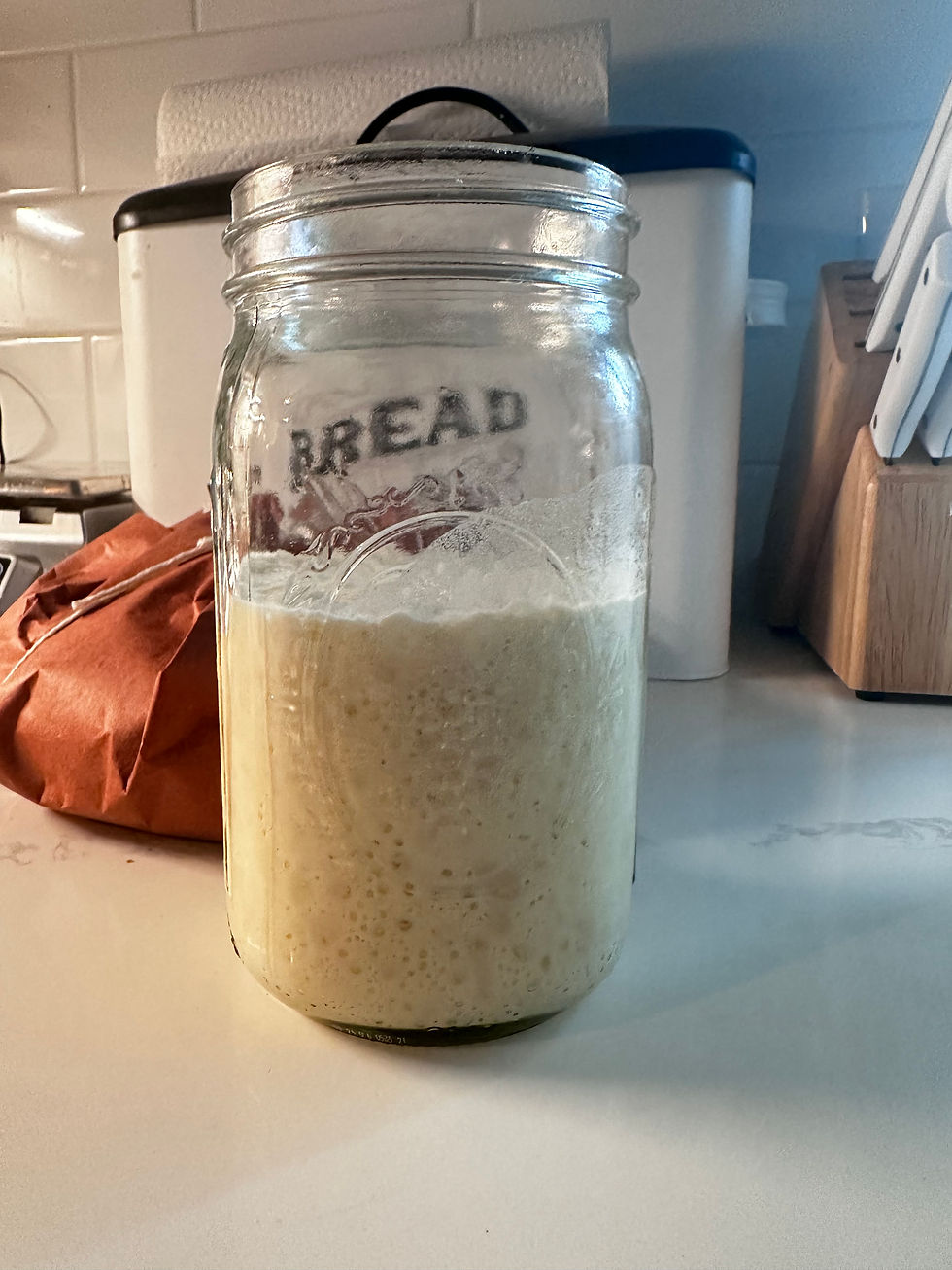
Once your starter is ready the only thing you need to worry about is adding equal parts flour and water. EPFW.
That’s it.
Whether you plan to start a business, bake one loaf or 1000, adding equal parts flour and water is all you really need to worry about. EPFW.
Adding one and not the other throws off the ph so just remember equal parts flour and water. EPFW.
I typically keep about 20-50g on hand and I add just enough for my next loaves and put it back in the fridge. When I’m ready to use it, I let it come to room temperature and get bubbly, and mix my dough. OR, i'll feed early AM to use by the afternoon.
The ratios are where the magic happens. When you feed your starter you are in fact feeding a bacteria. The bacteria produces gas and that is where your rise comes from.
The ratio for example 1:2:2 (starter:flour:water) vs 1:20:20 will dictate how quickly it will rise and be ideal for use, but more on that later.
OH NO your typically bubbly starter is suddenly not rising what to do?? EPFW. Until it’s happy again.
Your starter is a living thing, but it doesn’t require babying. 1tbsp flour and water and putting it in the fridge will keep it happy for a few days to a week.
A solid feeding (ie 1:1:1 or 1:5:5) and in the fridge will keep it happy for a couple of weeks. Of course if you plan on baking regularly, this isn’t ideal as starter gets stronger with more feedings.
You don’t require a fancy jar. It prefers 72° so ambient temp will do. And there’s no such thing as discard. So don’t be afraid to use it in other recipes.
As always, if it grows mold or develops a dark colored liquid on top, toss it. Better to be safe than sorry.
And when in doubt, take a deep inhale and exhale the doubt and worry. This has been done for thousands of years, you are the culmination of millennia of knowing and you will be just fine. Remember Occam's Razor, the simplest solution is typically the most correct.
Happy baking!
If you have any questions, don’t hesitate to contact me :)



Comments